 SKIP TO CONTENT
Why the Type of Fire Dictates the Required Testing
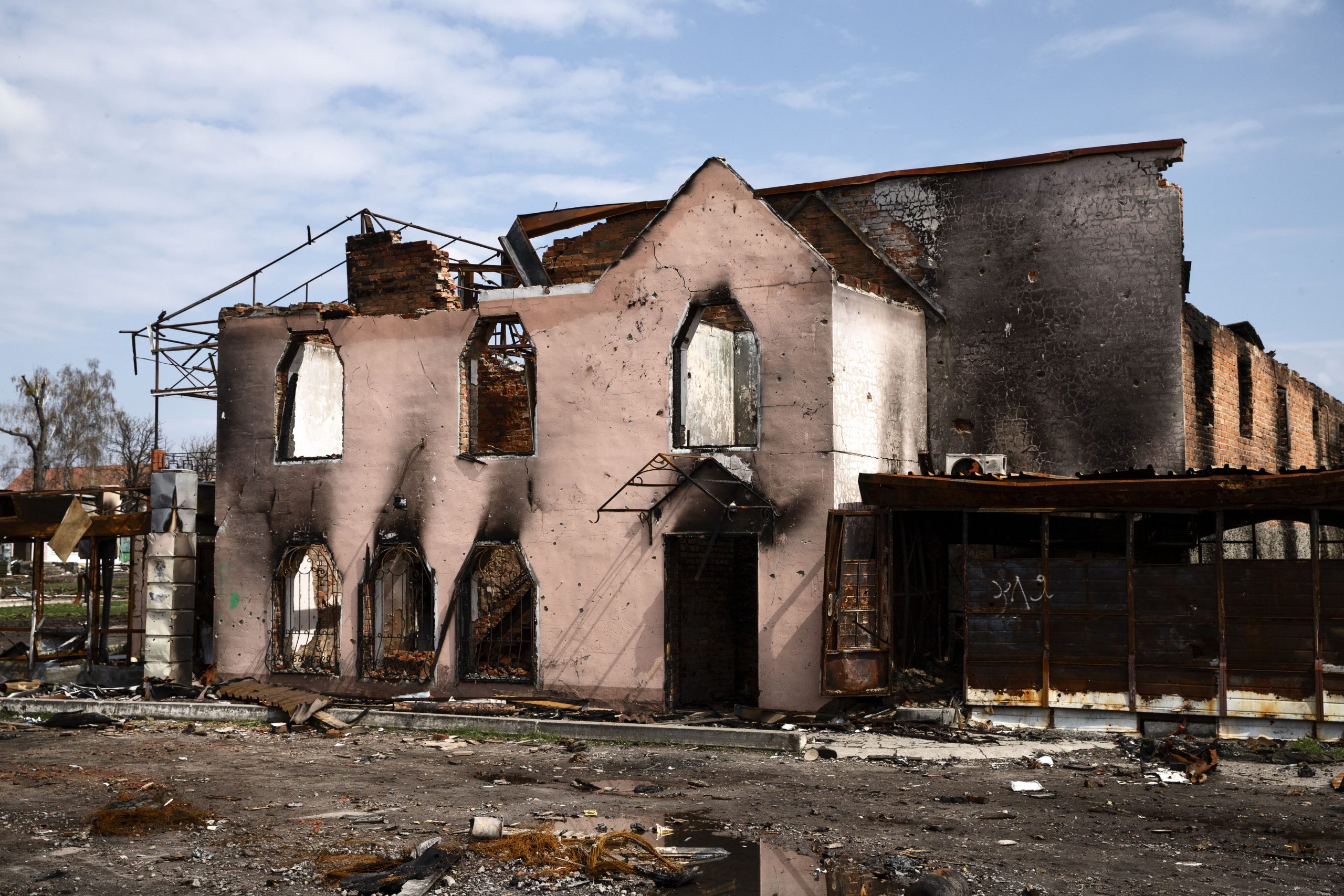
From a distance, two fires can look the same. But what’s burning, and how it burns, changes everything.
The type of fire determines not only what’s left behind but also what kind of testing is needed to ensure a property is truly safe for rebuilding and reoccupation.
At Rubin Adjusting, we’ve seen firsthand how different fire types leave behind very different chemical and physical residues. Whether it’s a house fire or a wildfire that has spread into a residential neighborhood, the testing requirements depend on the chemistry of what burned.
That chemistry — what fuels the fire, how hot it burns, and how much oxygen is available — shapes everything that follows. Understanding this connection is key to creating accurate remediation and recovery plans.
Not All Fires Are the Same
Fire investigators and environmental labs classify fires into three main categories:
- Wildfires: fueled by vegetation such as grass, brush, and trees.
- Structure fires: fueled by man-made materials like plastics, treated wood, wiring insulation, household products, and synthetic fabrics.
- Wildland-Urban Interface (WUI) fires: a combination of both where homes, vehicles, and infrastructure burn alongside natural vegetation.
What fuels the fire is the critical factor. It directly influences the byproducts produced during combustion.
Wildfires primarily burn vegetation such as grass, shrubs, and trees. These organic fuels create ash, soot, and particulate matter that are mostly carbon-based.
Structure fires involve synthetic materials found in homes and buildings. Items like insulation, foam cushions, wiring, siding, plastics, flooring, and electronics produce a wide range of chemicals when burned. These may include volatile organic compounds, heavy metals, flame retardants, plasticizers, and dioxins.
Wildland-Urban Interface (WUI) fires are the most complex. In these events, homes, vehicles, infrastructure, and vegetation all burn together. The mix of natural and synthetic fuels creates a highly varied chemical signature that is unlike either a traditional wildfire or a typical indoor structure fire. According to the report The Chemistry of Fires at the Wildland Urban Interface, WUI fires produce emissions that differ significantly from wildfires because the materials involved contain halogens, metals, and other elements not found in vegetation.
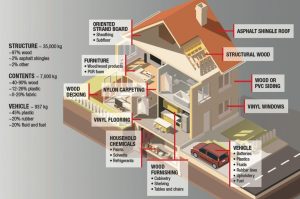
Examples of the types and quantities of materials that can be found in the home. Source: The Chemistry of Fires at the Wildland Urban Interface, page 34.
The type of fuel determines the chemical pathway of the fire. It affects temperature, oxygen availability, and the combustion stages. These variations create different contaminants that settle in soil, dust, air, and water. For this reason, understanding what burned is the first step in determining what should be tested.
How Fire Type Determines Testing
Since different fuels release different contaminants, post-fire testing must be customized to the conditions at the site:
- Wildfire testing – This often focuses on organic residues such as ash, soot, and polycyclic aromatic hydrocarbons. These contaminants typically originate from biomass.
- Structure fire testing – This requires a wider scope. Synthetic materials release chemicals such as chlorinated compounds, phthalates, benzene derivatives, heavy metals, and combustion byproducts from flame retardants. These do not appear in significant quantities in typical wildland environments.
- WUI fire testing – Testing must account for organic pollutants, synthetic residues, metals, PFAS from firefighting foam, dioxins from burning PVC or vinyl materials, and any material-specific contaminants that might originate from household contents. No two blocks of a neighborhood are the same, and neither are their testing requirements.
Combustion conditions add another layer of complexity. A hot and well-ventilated fire can create different hazards than a smoldering, oxygen deprived one. The same material can produce different contaminants depending on how it burns. Because of this, the correct testing panels must reflect both the materials and the fire behavior. Otherwise, key contaminants may go undetected.
What Professional Testing Looks For
When an environmental testing team evaluates a property, the first step is identifying what burned and where. That information guides a site-specific sampling plan that may include:
- Surface sampling to determine soot and ash deposition inside the structure
- Soil testing to detect metals, PFAS, or other persistent compounds
- Air or HVAC testing for particulates or volatile chemicals that may linger in ductwork
- Water testing to determine if runoff or firefighting water may have carried contaminants into the property
Laboratories use different analytical methods depending on the suspected contaminants. Smoldering synthetic materials may result in benzene, styrene, or toluene. Burned electronics may release lead or antimony. Melted plastics may produce dioxins or other long lived compounds. Each of these requires targeted testing, which is why matching the test to the fire type is essential.
Why Accurate Testing Matters
Testing that does not reflect the fire type can lead to incomplete cleanup or premature reentry into unsafe structures. Hidden contamination can cause long-term health issues, degrade property value, or result in costly future remediation.
Accurate testing ensures that contaminants are properly identified and documented. It also ensures that insurance settlements reflect the true extent of the loss.
At Rubin Adjusting, we help clients ensure that their testing and restoration efforts meet the right standards for their specific fire type. Correct testing is not simply a technical detail. It is the foundation for a safe and informed recovery.
If your home or business was affected by a fire and you are unsure what type of testing you need, we’re here to help. Our team can guide you through the testing and claims process, explain what your results mean, and ensure that your recovery plan reflects the true scope of your loss. Contact us to schedule a free consultation and get expert support every step of the way.
Sources: National Academies of Sciences, Engineering, and Medicine. 2022. The Chemistry of Fires at the Wildland-Urban Interface. Washington, DC: The National Academies Press.