 SKIP TO CONTENT
Why Roof Inspections Matter After a Fire, Even When Damage Isn’t Visible
After a wildfire or structure fire, many property owners look to the roof for reassurance. If the surface appears intact, it’s easy to assume the roof wasn’t affected.
Unfortunately, that assumption is one of the most common reasons fire claims end up under-scoped.
Fire and smoke damage doesn’t always announce itself with visible charring or obvious odor. In many cases, the most significant contamination occurs beneath the surface, especially within roof systems that are rarely opened or tested during initial inspections.
To understand why roof systems are so often affected without showing visible damage, it helps to look at how fire and smoke actually move during a fire event.
How Fire and Smoke Interact With Roof Systems
During a fire, smoke and combustion byproducts move according to heat, pressure, and airflow, not just open windows or visible damage. Roofs play a critical role in this process.
Roof assemblies contain multiple potential pathways for smoke intrusion, including seams, penetrations, vents, drains, and rooftop equipment. Even when flames never reach the structure, smoke can travel across and into the roof system.
Rather than acting as a simple barrier, the roof can become a collection zone for fire emissions, particularly in the layers beneath the membrane. These areas are rarely visible during standard inspections, which is why roof-related damage is often overlooked.
How Smoke Settles Beneath the Surface and Persists in Roofing Materials
As temperatures fluctuate during and after a fire, microscopic smoke particles are drawn toward cooler surfaces. This behavior causes fire emissions to migrate into areas that may not show visible damage.
Roof assemblies are especially vulnerable to this process. After a fire event, roofing layers often cool faster than the surrounding air, creating conditions where smoke residues settle beneath the surface instead of remaining visible on top.
Once smoke enters the roof system, the materials themselves become part of the problem. Many roofing components, including insulation, underlayment, and decking, are porous by design. These materials can absorb smoke residues and combustion byproducts, allowing contamination to persist long after visible signs fade.
Since this contamination occurs inside layered materials, it is rarely identified during surface-level inspections. A roof can appear intact while still retaining fire emissions within its internal components.
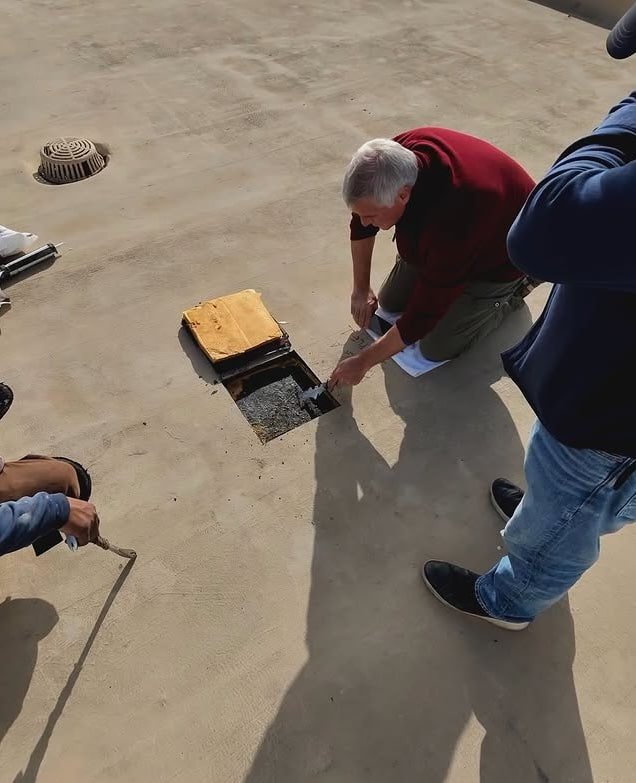
The image below shows a Rubin Adjusting team conducting a roof test cut during an inspection. This involves creating a small, controlled opening in the roof to examine the materials beneath the surface, including insulation, underlayment, and decking.
Inspections like this allow adjusters to document conditions that cannot be seen from above, such as material composition, hidden damage, and potential contamination from smoke or fire emissions. While a visual walk-through may confirm that a roof appears intact, it cannot determine what is happening inside the roof assembly.
That distinction is critical when evaluating the true scope of a fire claim.
In situations like this, destructive testing becomes necessary. Destructive testing uses limited, intentional openings, such as roof test cuts, to evaluate components that may have been exposed to smoke or heat, even when no exterior damage is visible.
These findings provide the documentation needed to support an accurate scope of loss.
At Rubin Adjusting, we prioritize thorough testing and detailed documentation so claims are evaluated based on evidence, not assumptions. This approach helps ensure property owners are not left with incomplete repairs or under-scoped claims simply because damage wasn’t obvious at the surface.
Roof Systems Aren’t the Only Area Where Damage Is Missed
Roofs are not the only building system where hidden fire damage is frequently overlooked.
We see this same pattern in HVAC systems, where smoke contamination often goes undetected because the system was turned off during the fire. Smoke moves according to heat and pressure, not whether equipment is running.
The same principles apply throughout a building. Whether it’s ductwork, wall cavities, attic spaces, or roof assemblies, the issue is not visibility. It’s whether the area was properly accessed, tested, and documented.
Why Initial Insurance Inspections Often Miss Roof Damage
After a fire, insurance inspections often prioritize speed and surface accessibility. While this may reduce upfront costs, it can lead to incomplete assessments that overlook hidden contamination.
Common limitations include:
- Minimal testing
- Visual-only evaluations
- A focus on easily accessible areas
In many cases, roof assemblies are never opened or examined beyond what can be seen from the surface, even though smoke and combustion byproducts may have settled into insulation, underlayment, and decking.
When these areas are not properly evaluated, the risks extend beyond the scope of the claim. Fire-related contaminants can remain trapped inside porous roofing materials, potentially contributing to lingering odors, indoor air quality concerns, and ongoing exposure long after a property is deemed “clean.”
Once repairs begin, opportunities to inspect roofing layers are often lost. If hidden contamination is discovered later, property owners may be left without coverage for damage that should have been identified and addressed from the start. This can increase both long-term costs and potential health risks.
Looking Beyond the Surface Protects the Property and the Claim
If your property was exposed to fire or heavy smoke:
- Do not assume the roof, hvac system, or other areas were unaffected because they look intact
- Ask whether roof assemblies were evaluated, not just observed
- Understand that documentation matters just as much as visible damage
A careful, informed evaluation can make the difference between a complete recovery and lingering issues that surface months or years later. Taking the time to look beneath the surface helps protect both the property and the integrity of the claim.
If your home or commercial property was affected by a wildfire or structure fire, Rubin Adjusting can help you understand what needs to be tested and advocate for a complete and accurate scope of loss. Contact us today to get started.