 SKIP TO CONTENT
Q&A with Jesse Rubin: What the FAIR Plan Court Ruling Means for California Property Owners
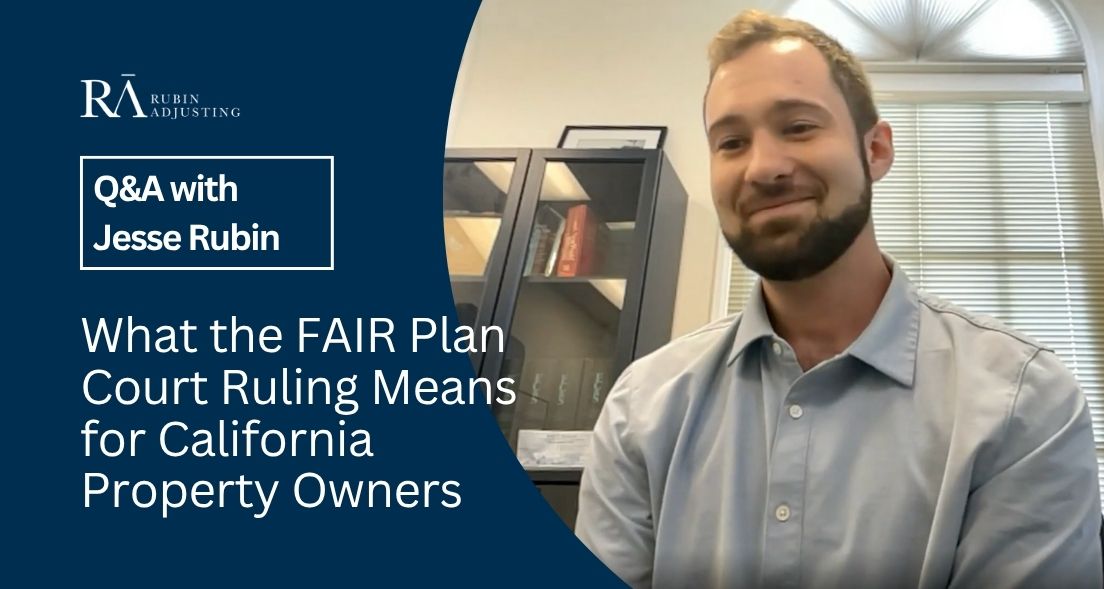
Last month, a California judge ruled that the California FAIR Plan has been illegally underpaying or denying smoke damage claims. The court found that the FAIR Plan’s policy of only covering visible or smellable damage fails to meet California’s minimum coverage standards.
For Jesse Rubin, founder of Rubin Adjusting, this ruling validates what he and his team have been fighting for over the past two decades. We sat down with Jesse to hear his take on the ruling, what it means for wildfire survivors, and why now is the time to revisit denied or underpaid claims.
Q: What was your initial reaction to the court ruling?
“It was fantastic news. We’ve known for a long time that the California FAIR Plan wasn’t doing right by people. Thousands of homeowners have received poor treatment and were told, ‘This is just the way it is.’ This ruling gives them hope that things will finally change.”
Q: For homeowners or business owners with FAIR Plan claims, how does this ruling change the game?
“Right now, it’s still very new. FAIR Plan adjusters don’t know what to do—they’re essentially saying, ‘Let’s see what happens.’ But this is a huge win for property owners. It puts pressure on the FAIR Plan to start doing the right thing and reevaluate these claims.”
Q: What kinds of smoke damage were typically denied before this ruling?
“Insurers often claimed that unless the smoke caused permanent physical damage, it didn’t need to be covered. Their stance was: if you can wipe it off yourself, go ahead and do that. But that’s not how restoration works. You have to assess how deep the damage is, and whether it’s safe to restore or needs to be replaced. Forcing people to clean dangerous contamination themselves is unacceptable.”
Q: Why is it flawed to say only visible damage “counts”?
“You can’t see cyanide, but you still don’t want to be around it. Smoke particulates can settle into places you never see—like behind walls or inside sliding door frames—and can still be harmful. When insurers say damage must be visible, they’re limiting their responsibility. But their duty is to fully investigate.”
Q: What about people whose claims were already denied or settled? Should they revisit them?
“Absolutely. Most FAIR Plan claimants who received payouts felt like they were denied. For example, restoration estimates would say $100,000, and the FAIR Plan would offer $3,000. That’s not a real settlement. Those people need to go back and demand re-evaluation. The courts are saying: you deserve better.”
Q: What does this ruling reveal about the FAIR Plan and the insurance industry overall?
“Insurance companies don’t make money paying claims. But the FAIR Plan takes it to another level. They create hoop after hoop, wearing people down until they accept a lowball offer just to be done. This ruling exposes how they’ve been operating for years—and it might finally put a stop to it.”
Q: This ruling echoes a lot of what Rubin Adjusting has been advocating for long before it made headlines. Can you share how your experience over the last 50+ years prepared you for this moment?
“We’ve been through this with past wildfires. In previous events, strict testing protocols were the norm—testing for heavy metals, toxins, and more. This time, those protocols vanished. But because we’ve seen this before, we know how to guide our clients, get the right testing, and advocate for what they truly deserve.”
Q: How might this ruling influence future insurance policies or claims?
This sets the tone: you can’t sell substandard coverage in California. The FAIR Plan was trying to test the system and go below the legal minimum. Thankfully, the courts said no.
Q: What would you say to someone who feels discouraged or confused by the process?
“That’s the point of the system—to wear you down. It’s designed to confuse you, to make you doubt yourself, and to push you to settle for less. But you don’t have to do it alone. Having a professional at your side changes everything. That’s when the insurance companies start taking notice.”
Q: What role do public adjusters like yourself play in this process?
“A good public adjuster is a champion for the insured. We fight for people who feel like they can’t fight for themselves. We know the process, we know the players, and we know how to get claims resolved in a way that’s fair for the homeowner and the insurance company.”
Q: Is it ever too late to get help from a public adjuster?
“People ask this all the time: ‘It’s been six months or a year—am I too late?’ Most of the time, the answer is no. As long as your claim hasn’t been fully closed—or even if it has but you’re still within the legal timeframe—there’s a good chance we can help. It’s never too late to ask for a second opinion or to fight for what’s fair.”
Now Is the Time to Act: Don’t Settle for Less
If you’re a California homeowner or business owner impacted by wildfire smoke, this ruling could be the lifeline you’ve been waiting for. Even if your claim was denied or settled months ago, it’s not too late to take action.
Don’t let them trick you into thinking you don’t have options. Rubin Adjusting is here to advocate for you, every step of the way. Contact us to schedule a free consultation and get the support you need.